

Fruit & Vegetable Fertiliser | Organic Plant Food 4-5-6
A balanced 4-5-6 feed for fruit and veg.
from £11.50
Dr Forest Organic Tomato Fertiliser is a slow-release tomato feed with an NPK of 3-4-6, so it carries twice as much potassium as nitrogen. Potassium helps move sugars from the leaves into swelling fruit, and holding nitrogen lower discourages the plant from putting that effort into leaf. It is a dry, milled plant food for tomato plants in pots, grow bags, borders and allotment beds, blended by hand in Stockport from 16 organic ingredients including Yorkshire polyhalite, Scottish seaweed, British biochar and dried worm castings.
A liquid tomato feed goes on every week; one dressing of this keeps working for two to four weeks. Alongside the NPK it brings calcium, magnesium, sulphur and trace elements, while most liquid feeds are mainly N, P and K. The 1.5 kg size comes as two 750 g compostable kraft bags; larger sacks run up to 120 kg.
Dr Forest makes premium organic fertilisers in Stockport, Greater Manchester, and this tomato fertiliser is blended by hand in small batches, every ingredient listed individually. The name comes from Joe's grandfather, Dr Forrest, a GP in a Lancashire mining town near Preston who kept a back-garden plot for the runner beans he turned into piccalilli for family and friends. For a straight comparison with the best-known bottles, read what is actually in Tomorite: five tomato feeds compared. Made by Growers. Backed by Science.
This is a multi-input blend, with every ingredient listed individually. The polyhalite is mined 1,200 m below the North Sea off North Yorkshire, the seaweed is hand-harvested in Scottish waters, and the biochar is British and fermented before blending.
One crystal, four nutrients, all as sulphates: 14% K₂O, 17% CaO and 6% MgO plus sulphur. Unlike conventional potash it releases gradually (Das et al., 2026). More in our polyhalite guide.
The quick potash: 50% K₂O in sulphate form, which covers the start of each feed while the slower ingredients come on stream. No muriate of potash (potassium chloride) is used anywhere in the formula.
Magnesium sits at the centre of every chlorophyll molecule, so it is tied directly to photosynthesis. Ground to 5 microns at 20.9% Mg. Short supply shows as yellowing between the veins of older leaves; see magnesium deficiency in tomato plants.
A plant protein concentrate that soil microbes break down to plant-available nitrogen. Young plants get what they need to establish without a surge of soluble nitrate.
A calcined plant meal, not rock phosphate, at around 15% P₂O₅ and 9% CaO: phosphorus for rooting after planting out and for flowering and fruit set, plus a second calcium source.
A high-protein seed meal that releases nitrogen steadily over several weeks as microbes break it down. Nitrogen that arrives gradually is less likely to push soft, leafy growth.
Dried, milled seaweed bringing zinc, iron, manganese and boron, plus alginates that help compost hold together and hold water.
Included for its biostimulant compounds: seaweed extracts carry growth-active substances such as cytokinins and betaines (Craigie, 2011).
Slow nitrogen and organic matter. Alfalfa meal is also where the growth-promoting substance triacontanol was identified (Ries et al., 1977).
Stable, porous carbon that stays in the soil for years. Its pores give microbes somewhere to live, and microbial biomass generally rises after biochar goes in, though why is still not well understood (Lehmann et al., 2011).
Humic substances improve the uptake of some nutrients, nitrate in particular, and help plants acquire iron by holding it in solution (Nardi et al., 2002).
Readily available nutrients plus the bacteria and fungi that get the plant meals breaking down.
Plants short of silicon are often structurally weaker (Epstein, 1999), and a cordon carrying five or six heavy trusses needs a strong stem.
Montmorillonite and illite clays hold potassium, calcium and magnesium on their surfaces and let them go between waterings, a capacity that does not wear out.
A slow trickle of zinc, iron, copper and manganese, which plants need in small amounts to run their enzyme systems.
Dried plant material added as a varied food source for the soil microbial community.
| Nutrient | Main sources | Smaller contributions |
|---|---|---|
| Nitrogen (N) | Nitrogen plant extract, rapeseed meal, alfalfa meal | Seaweed meal, worm castings, herbal mixture |
| Phosphorus (P₂O₅) | Phosphorous plant meal | Nitrogen plant extract, rapeseed and alfalfa meals, worm castings, biochar |
| Potassium (K₂O) | Yorkshire polyhalite, sulphate of potash | Seaweed, alfalfa meal, nitrogen plant extract, worm castings, illite clay, basalt |
| Calcium | Yorkshire polyhalite, phosphorous plant meal | Basalt, clay minerals, seaweed meal, worm castings |
| Magnesium | Micronised magnesium mineral, Yorkshire polyhalite | Seaweed meal, basalt, montmorillonite clay |
| Sulphur | Yorkshire polyhalite, sulphate of potash | Rapeseed meal, seaweed meal |
| Trace elements | Seaweed meal and extract, basalt rock dust | Clay minerals, polyhalite, worm castings |
This product is a milled powder with a bulk density of 1 g/ml, so grams and millilitres are interchangeable. You can measure by weight on a kitchen scale or by volume using a measuring jug or spoon. 3 level teaspoons = 1 tablespoon ≈ 15 ml. For best results, mix with an equal volume of compost before applying.
| Situation | Rate (g = ml) | Frequency | Notes |
|---|---|---|---|
| Potting mix preparation | 5–10 g per litre of compost | Once at potting | 5 g/L in enriched mixes. 10 g/L in plain or peat-free compost. |
| Container top-dressing | 1–3 g per litre of pot volume | Every 2–4 weeks | 1 g/L for established plants. 2–3 g/L for large containers (20 L+) or peak fruiting. |
| Situation | Rate (g = ml) | Frequency | Notes |
|---|---|---|---|
| Bed preparation | 150–200 g per m² (up to 250 g for depleted soil) | Once before planting | Fork into the top 10–15 cm. Preparing 2–4 weeks in advance allows nutrients to begin releasing. |
| Outdoor top-dressing | 75–150 g per m² | Every 2–4 weeks | 75 g/m² in fertile soil during vegetative growth. 100–150 g/m² during peak fruiting. |
| Single plant at transplanting | 30–45 g per plant | Once at planting | Mix into the planting hole with an equal volume of soil or compost. 10 cm gap from the stem. |
| Single plant top-dressing | 30–45 g per plant | Every 2–4 weeks | Ring around the plant 10–15 cm from the stem. Lightly scratch in. Water in thoroughly. |
| Stage | Timing | Rate & frequency | Goal |
|---|---|---|---|
| Bed preparation / potting mix | 2–4 weeks before planting | Beds: 150–200 g/m². Pots: 5–10 g/L compost | Build a nutrient-rich root zone before the plant arrives |
| Transplant establishment | At planting | 30–45 g per plant into the planting hole | Localised nutrient boost for rapid rooting |
| Early vegetative growth | 10–14 days after transplanting | 75 g/m² or 1 g/L every 3–4 weeks | Healthy structure without excessive nitrogen-driven bulk |
| Active flowering & fruit set | First flowers through heavy fruit load | 100 g/m² or 2 g/L every 2–3 weeks | Potassium and phosphorus support for flower retention and fruit set |
| Peak fruit fill | Heavy green fruit on all trusses | 150 g/m² or 3 g/L every 2 weeks | Maximum demand — sugar loading and lycopene synthesis |
| Ripening & late season | Once fruit begins to colour | Lower range or skip; every 3–4 weeks | Concentrate sugars and volatiles; ease off nitrogen |
Organic nutrient release depends on moisture. Do not allow the pot to dry completely. Water immediately after top-dressing containers, and water single-plant dressings in thoroughly.
Use Dr Forest Seaweed Extract Powder as a fortnightly foliar — it adds cytokinins and trace minerals without extra nitrogen. Apply Dr Forest Liquid Gypsum as a root drench if blossom end rot appears mid-season. Use Dr Forest All Purpose Fertiliser 4-4-4 during early vegetative establishment before switching to this formula at first flower.
Timings are for a typical English season; add a week or two in the north and in Scotland. Our full tomato growing guide goes month by month.
Some paste types reach 90–120 cm, set most of their fruit, then slow right down. Train them as cordons, but feed on the lighter bush schedule once most trusses have set.
Naturally sweet. Overfeed a cherry tomato and you get leaf, not fruit.
The classic British greenhouse tomato. Follow the How to Use tab as written.
The highest blossom end rot risk, because the blossom end expands fastest. Water evenly, and consider a foliar calcium such as Amino Chelated Calcium while fruit swells.
Dense fruit with a high dry-matter content, which suits a potash-led feed.
A strong initial potting mix charge (8–10 g/L), then lighter top-dressing (1–2 g/L). Reduce or stop once most of the fruit has set.
Older varieties keep flavour chemistry that modern breeding lost (Tieman et al., 2017).
More tomato problems come from erratic watering than from any shortage of fertiliser. Drought followed by a soaking brings blossom end rot, split fruit and patchy ripening.
Water daily in warm weather, twice in a heatwave, until it runs from the base; dry peat-free compost is hard to re-wet. If pots stop taking water, here is why.
Water deeply two or three times a week rather than a little daily, and mulch 5–8 cm deep with compost or straw.
Water at the base in the morning and ventilate afterwards. Drip irrigation on a timer is the most reliable method under cover.
Calcium travels with water. Ho & White (2005) put blossom end rot down to calcium delivery falling behind demand in the fast-expanding cells at the blossom end, so the calcium in this blend reaches the fruit only if the water does.
| Month | Task | Feeding |
|---|---|---|
| February–March | Sow on a warm windowsill or in a heated propagator at 18–21°C. Do not sow too early. | — |
| April | Pot on into 9 cm pots at the first true leaves; harden off plants going outside; prepare beds and grow bags. | Base charge: 150–200 g/m² or 5–10 g/L |
| May | Plant out: greenhouse late April to early May; outdoors after the last frost, typically late May in most of England. | 30–45 g per planting hole |
| June | First flowers and first truss set, when potassium demand starts to climb. | Begin fortnightly or three-weekly top-dressing |
| July | Peak period. Stop outdoor cordons at 4–5 trusses; greenhouse cordons can go to 6–8. | Every 2 weeks at the upper end of the range |
| August | First ripe fruit. Ease off watering slightly as fruit colours to concentrate sugars. | Reduce to every 3–4 weeks |
| September–October | Pick the rest; green fruit ripens in a drawer with a banana. The biochar stays in the soil for next year. | Lower range or skip; every 3–4 weeks while fruit is still colouring |
Water evenly and mulch; in severe cases a root drench of Dr Forest Liquid Gypsum can help. Later trusses usually come good. More in our blossom end rot guide.
The skin cannot stretch fast enough when water floods back in. Water evenly and mulch.
Interveinal yellowing points to magnesium; this formula has two main magnesium sources, but a foliar spray of Epsom salt (10 g per litre) gives a quick correction. See why tomato leaves turn yellow.
Feed less often, give six or more hours of sun, and ventilate a greenhouse to keep it under 30°C, above which pollen viability drops sharply.
Plants under glass largely escape it. Outdoors, grow resistant varieties such as Crimson Crush or Mountain Magic, and bin affected foliage. No fertiliser, this one included, protects a plant from blight.
Hard green shoulders that never ripen. A potash-led feed covers the potassium side; under glass, leave enough foliage to shade the trusses.
A tomato's flavour is the sum of sugars, acids and a large set of volatile compounds you smell rather than taste (Mathieu et al., 2009). Variety matters a great deal: modern commercial varieties carry significantly less of many key flavour chemicals than older heirloom varieties (Tieman et al., 2017), partly because flavour is too genetically complex to breed for easily (Klee & Tieman, 2018).
Potassium's role in moving photoassimilates, the sugars made in the leaves, is one reason it matters for crop quality (Römheld & Kirkby, 2010). In a trial of three potassium levels, tomato lycopene rose in step with potassium supply while yield did not change (Serio et al., 2007). Nitrogen is held back because a tomato given plenty of it grows leaf. The exact 2:1 figure is our formulation choice; the research points that way without fixing a number.
Ordinary organic fertilisers vs 100% chemical fertiliser, meta-analysis of 124 studies (Fan et al., 2023): literature figures, not a trial of this product.
| Compound | Made from | How |
|---|---|---|
| Sugars (fructose, glucose) | Photosynthesis in the leaves | Carried to the fruit in the phloem, a job potassium supports |
| 6-Methyl-5-hepten-2-one | Lycopene | Oxidative cleavage of lycopene |
| Geranylacetone | Linear carotenoids | Carotenoid cleavage |
| β-Ionone | β-carotene | Carotenoid cleavage |
| Hexanal, (Z)-3-hexenal | Linoleic and linolenic acids | The 13-lipoxygenase pathway |
| 3-Methylbutanal | Leucine, an amino acid | Amino acid breakdown |
Sources: Mathieu et al. (2009); Römheld & Kirkby (2010). The carotenoid-derived compounds are why colour and aroma travel together.
Organic nitrogen must be broken down by microbes before roots can use it. Across 124 studies, ordinary organic fertilisers cut fruit nitrate by 13.0% and raised fruit sugar by 10.7% against chemical fertiliser alone (Fan et al., 2023).
Lycopene and related carotenoids are broken down in ripening fruit into aroma compounds such as 6-methyl-5-hepten-2-one and geranylacetone (Mathieu et al., 2009). Ordinary organic fertilisers raised lycopene 10.8% against chemical fertiliser (Fan et al., 2023), and in a separate trial lycopene rose with potassium supply (Serio et al., 2007).
In tomato trials, humid air sent less calcium to the leaves and more to the fruit, a salty root zone cut uptake, and the lowest calcium sat in the tissue where blossom end rot starts (Adams & Ho, 1993). The likely trigger is delivery to fast-expanding cells falling behind demand (Ho & White, 2005).
Organic fertilisers raised soil organic matter by 24.4% against chemical fertiliser alone, with higher soil nitrogen, phosphorus and potassium (Fan et al., 2023).
Its pores give soil microbes somewhere to live, and microbial biomass generally rises after it goes in, though why is still not well understood (Lehmann et al., 2011).
Humic substances improve nutrient uptake and help plants acquire iron (Nardi et al., 2002). Seaweed extracts carry cytokinins and betaines, and the old view that seaweed works mainly through its nutrients is no longer tenable (Craigie, 2011).
| Study | Scope | Finding |
|---|---|---|
| Fan et al. (2023) | 124 studies, 2,041 data sets | Ordinary organic fertiliser vs 100% chemical fertiliser: nitrate −13.0%, sugar +10.7%, lycopene +10.8%. All organic types: soil organic matter +24.4% |
| Gao et al. (2023) | 107 papers, 769 data sets | Organic fertiliser vs none: yield +42.2%, lycopene +24.0%, vitamin C +19.0% |
| Serio et al. (2007) | Three potassium levels | Lycopene rose linearly with potassium; yield unchanged |
Figures describe the published literature on these ingredient classes and are not product-specific yield guarantees.
20% of buyers here also chose Fruit & Vegetable Fertiliser
A balanced 4-5-6 feed for fruit and veg.
from £11.50
A balanced slow-release feed for chillies and peppers.
from £11.50
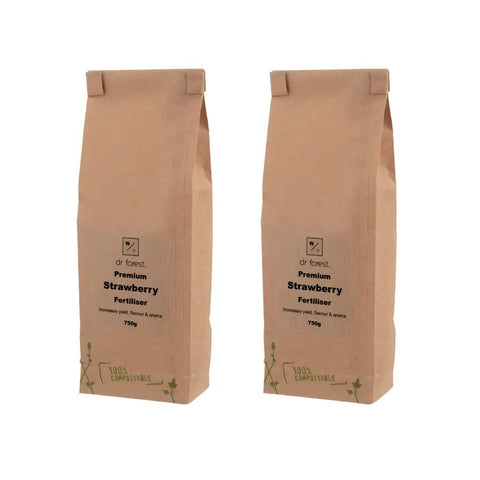
A high-potash slow-release feed for strawberries.
from £11.50