Fertiliser
Organic Tomato Fertiliser | Slow Release Tomato Feed 3-4-6
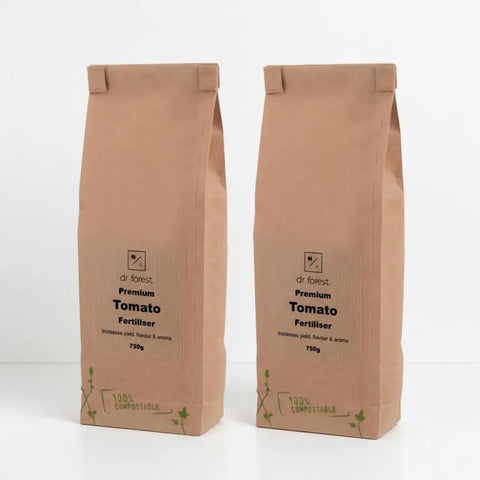
A slow-release 3-4-6 feed for tomatoes.
from £11.50
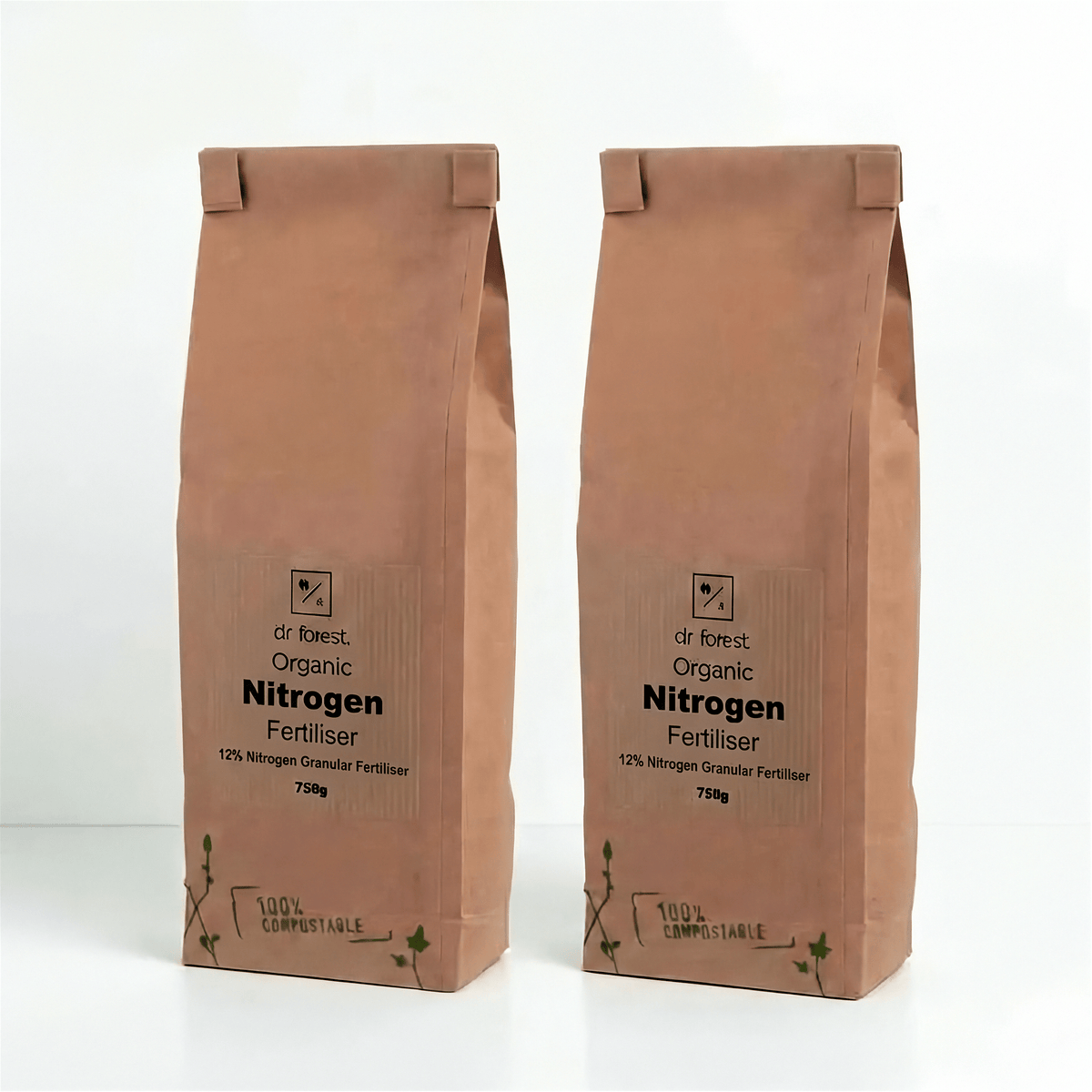
A nitrogen-rich, certified organic plant food supplying 13% nitrogen, made from fermented plant sugars. It greens up leafy vegetables, brassicas and lawns quickly, then keeps feeding for around six weeks. High in sulphur, low in salt, and entirely plant-based.
Nitrogen Extract is a certified organic, high-nitrogen fertiliser supplying 13% nitrogen as amino acids and proteins — the form plants and soil microbes use to build leaves, stems and chlorophyll. It is made from fermented plant sugars (molasses), with the nitrogen-rich proteins drawn off and dried into a clean 3 mm granule (sometimes sold as nitrogen pellets). A natural, plant-based source of nitrogen, certified organic and made in the UK.
Unlike fast synthetic salts such as ammonium nitrate, the nitrogen here is held in plant proteins. Roughly half is available within the first couple of weeks for a quick green-up, and the rest releases steadily over the following weeks as soil biology breaks the granule down. You get the speed of a feed and the staying power of an amendment, in one plant-based granule that is also high in sulphur and very low in chloride and salt.
Dr Forest — made by growers, backed by science. Certified organic, plant-based, and packed in recyclable, home-compostable paper.
For most of the last century the textbook view was that plants take up nitrogen only as nitrate or ammonium — mineral forms — and that organic nitrogen has to be broken down by microbes into those minerals first. That view is now out of date. Plants take up intact amino acids and small peptides directly through their roots, and in many soils organic nitrogen is a significant part of what they actually use (Näsholm et al., 1998; Näsholm, Kielland & Ganeteg, 2009).
That is what this product supplies. The nitrogen here is held in amino acids and proteins, drawn from fermented plant material and concentrated into a granule. Some is taken up directly; the rest is mineralised by soil biology at a measured pace. The result is a feed that works with the soil rather than flooding it.
Roots carry transporters for amino acids and short peptides and absorb them intact, short-cutting part of the soil nitrogen cycle. This is most useful in cooler soils and early in the season, when microbial mineralisation of nitrogen is slow and mineral nitrogen is scarce (Näsholm et al., 1998; 2009).
Around half of the nitrogen becomes available within roughly the first fortnight for a visible green-up, and the remainder releases gradually over several weeks as soil organisms digest the protein. One application feeds across a growth phase rather than spiking and crashing — and there is far less to leach away between feeds.
Proteins and chlorophyll are built from both nitrogen and sulphur. When sulphur is short, plants cannot fully use the nitrogen they take up, and growth and leaf colour suffer. Supplying sulphur in the same feed keeps the two in step and improves how efficiently the nitrogen is used (Marschner, 2012).
The organic carbon and humic substances in the granule feed the microbial community that releases nutrients, holds them against leaching, and builds stable organic matter. Studies that pair organic inputs with growing crops consistently show higher soil organic carbon and microbial activity than mineral-only feeding (Ferro et al., 2022; Liu et al., 2021).
This is a concentrated 13% nitrogen feed, so it is used at much lower rates than a balanced blend or a soil conditioner. Scatter the granules evenly, keep them off leaves and stems, and water in well. Apply to moist soil during active growth. Less, more often, beats one heavy dose.
One application feeds for around six weeks: roughly half the nitrogen releases in the first fortnight, the rest over the following weeks. Because of that, do not reapply more often than every five to six weeks. Across all uses, a single dressing sits between 20 and 55 g per m² (a rounded handful is roughly 30–40 g). Match the rate to how hungry the crop is, using the guide below.
Scatter over the bed and rake or fork lightly into the top 5–10 cm a few days before sowing or planting leafy and hungry crops. Use the lower rate on already-fertile soil, the higher rate where growth has been weak or the bed is freshly dug.
The hungriest leafy crops: brassicas (cabbage, cauliflower, calabrese and broccoli, Brussels sprouts, kale), leeks, sweetcorn, courgettes, squash and pumpkins, rhubarb, and spinach and chard. Scatter around the plants, keep granules off the foliage, work in lightly and water in. Two to three feeds across the season is usually plenty; stop once growth is strong and well coloured.
Lettuce and salad leaves, beetroot and chard tops, leafy herbs, and any plant showing pale lower leaves or slow, stalled growth. Lighter, more frequent feeding suits fast salad crops better than one heavy dose.
Spread as evenly as you can on a still day and water in well. The fast fraction greens the lawn up, the slow tail keeps it fed for weeks. Avoid applying in drought or to dry turf, and stop feeding nitrogen by late summer so you are not pushing soft growth into autumn.
For a new lawn, work into the top 5 cm of the prepared seedbed before sowing or laying turf. For overseeding, scatter over the area after seeding and water in thoroughly. The slow release feeds through establishment without scorching young roots.
Tomatoes, peppers, chillies, aubergines, beans and peas need nitrogen only to build their early leaf framework. Feed during vegetative growth, then stop at first flower and switch to a high-potash feed such as Bloom 2-8-10 or Late Bloom 0-5-10, or too much nitrogen pushes leaf at the expense of fruit.
A single spring application drives strong early foliage. Follow with a balanced or high-potash rose feed for the flowering flush, and avoid further nitrogen later in the season.
Mix into the compost when potting up leafy plants, or lightly top-dress established pots and water in. Containers hold a small soil volume, so keep to the lower rate and do not over-feed.
Even with a low salt index, too much nitrogen drives soft, sappy growth that flops, attracts aphids and resists flowering and fruiting; very heavy doses on dry soil can scorch. Stick to the rates above, water in, and reach for a balanced feed once leafy growth is established.
Pair with Seaweed Meal for the trace elements and biostimulant compounds a straight nitrogen feed doesn't carry. Move to Bloom 2-8-10 or Late Bloom 0-5-10 once crops set flower and fruit. For an all-round leafy-stage feed, use alongside Veg 4-4-4. On lawns, follow with Volcanic Rock Dust to remineralise the soil beneath the turf.
Within the Dr Forest living-soil programme, this is the mid-flower nitrogen booster for the Max yield build — about 0.6 g per litre of soil in total, split across two mid-flower doses. It is the lever that adds weight while potash and magnesium stay below their ceilings. See the Living Soil Kit and Refills.
13% of buyers here also chose Organic Tomato Fertiliser
A slow-release 3-4-6 feed for tomatoes.
from £11.50
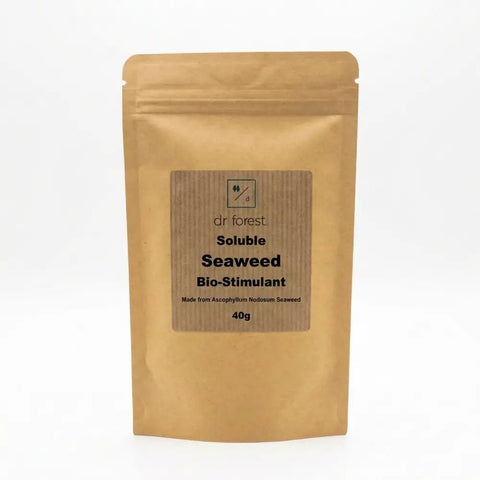
Fully soluble kelp for foliar or root feeding.
from £6.50
Helps water and feed soak in evenly, with less run-off.
from £14.00